Slowing Down, Listening Deep
Pauline Oliveros, Donna Tartt, Bette A. in stillness, silence and slowness

(Video and music above made from a Donna Tartt interview with Charlie Rose by Matt Pope. )
~.:.~
“Listening is not the same as hearing and hearing is not the same as listening.”-Pauline Oliveros
~.:.~
Two people sitting, talking at a table. Telling stories. Listening to each other. It seems so common, but also uncommon. When was the last time you went over to an aunt’s house, or an older sister, and let her tell you something from the deep wells of her mind and heart? When was the last time you listened to the village wise woman tell you a tale around the fire?
To really listen to a tales such as these, a person needs to be silent, and when silent, listen. To be silent we need to slow down. What else is as cheap and free as entering into silence so we can listen?
Silence has a way of clearing the head. How can we hear our own inner voice, the voices of our sisters and brothers, the voices of the animals and trees, the voices of the rivers, the voices that come in on a warm and gentle wind, if we don’t stop the frenetic pace of production long enough to hear what they have to say?
Slowing down gives us the pause that revives.
Talking is only one side of the equation in speaking truth to power. To hear the power of truth, we need to first shut our mouths and open our ears. To cut through life’s noise we have to turn off the volume of the worlds chatter and mental chatter and go into deep listening. From that silence the voice of our own intuition might just be one of the things we hear awaken.
Lucky for us the composer Pauline Oliveros left a roadmap for re-tuning our ears to inner and outer voices. We can use it to slow down and enter those silences that are pregnant with sound.
FROM THE DEPTHS OF SILENCE, INTUITION
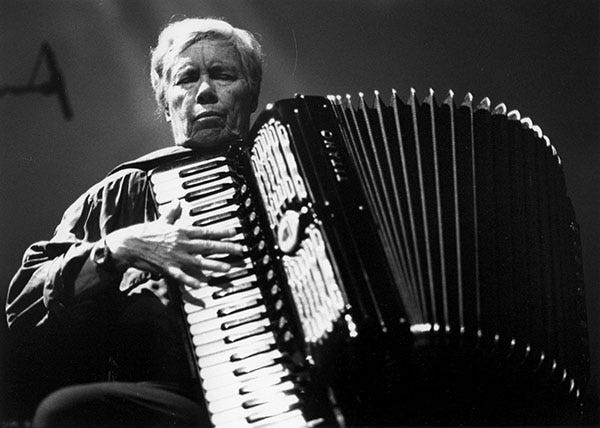
The title for this chapter comes from experimental sound artist, composer and ritualist Pauline Oliveros. A Tejana native of Houston, Texas, born in 1932, she was already playing music in kindergarten, the beginning of a lifelong fascination with sound and listening. She listened to everything, all the time. When she was nine, she started to play the accordion which was to be her lifelong instrument of choice though she became an accomplished multi-instrumentalist. She also became a maverick explorer of tape music, electronic sounds, and the creator of her own specialized delay systems.
Pauline was the definition of a deep listener. To her, the entire world of sound was rich with latent musicality. Reflecting on listening as a kid she said, “I used to enjoy my grandfather tuning his crystal radio. I liked the sounds of tuning the radio much more than the program. My father had a shortwave radio, which also I enjoyed the sounds of the shortwave tuning as well. Those were sounds that I liked.”
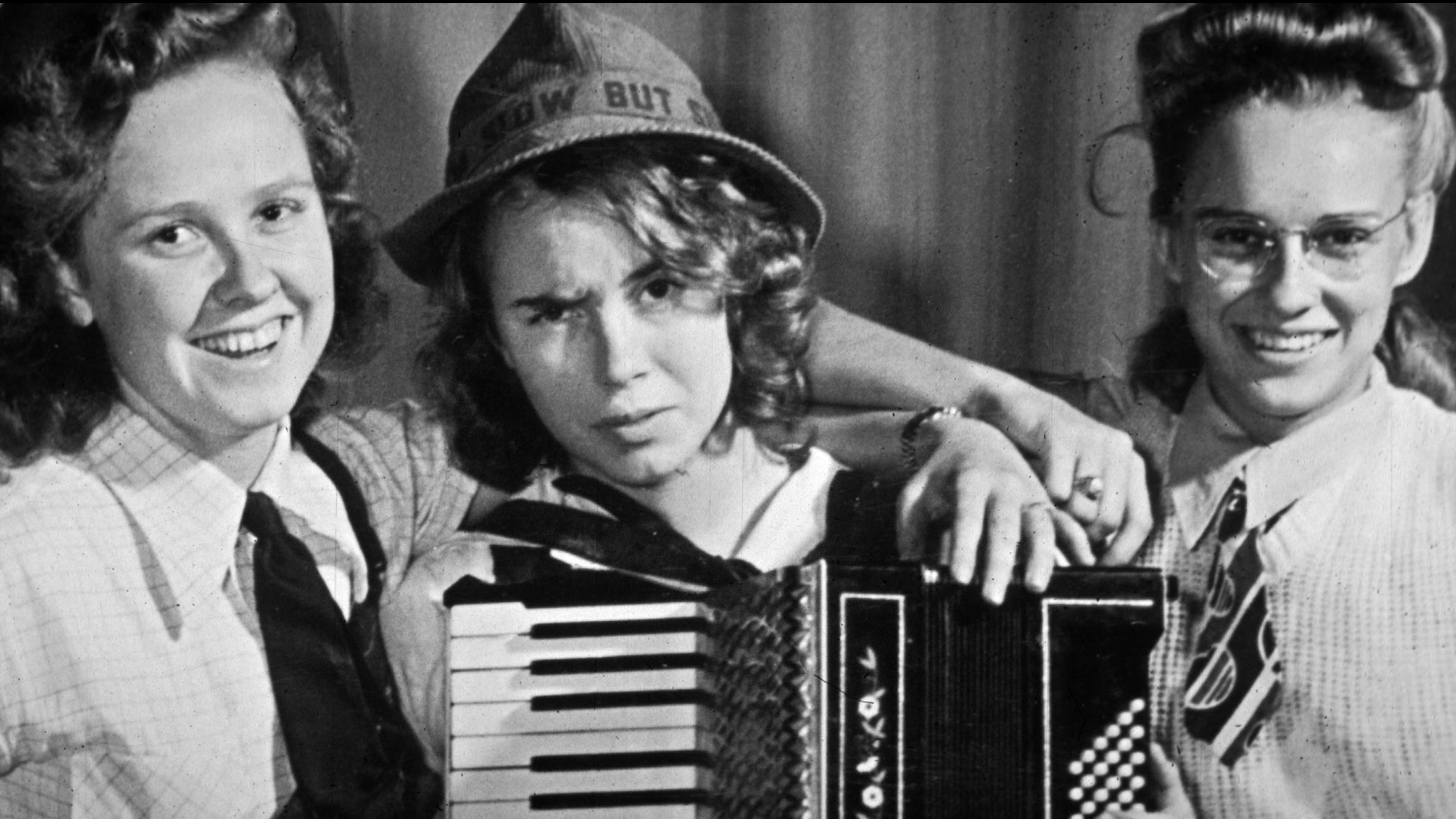
As she continued to excel at music in school, and with the encouragement of her pianist mother, she added violin, piano, tuba and French horn to the list of things she could play. At age sixteen, feeling the call of her vocation, she resolved to become a composer, and in time went to college in California. There she supported herself in part by giving accordion lessons. It was at San Francisco State College where she met the poet and composer Ramon Sender, the burgeoning minimalist master magician Terry Riley, and the devotee to avantgarde musical expression, Loren Rush.
With Riley and Rush she formed the very first free improvisation group outside of jazz music in the modern west. Riley had been commissioned to make a piece of music for a film score, but he hadn’t written anything, so he recruited Rush and Oliveros and took them over to the studios at KPFA to use their trusty Ampex tape recorder. They sat down with their instruments and no score. They improvised and caught the results on tape. Riley was on piano, Oliveros on French horn, and Rush on koto and percussion. They improvised several five-minute takes, and in the process realized how much fun they had playing unscored music together. When they listened to the playback together, they all realized they wanted to continue playing improvised music together. It’s an experience many kids who formed bands in the decades afterwards replicated: playing crazy ad hoc music, recording it to tape, and listening back with astonishment to the results. There is an entire world of seldom heard basement tapes containing such untold treasures.
Oliveros spent the remaining years of the 1950s steeped in Beat era circles of strangeness, making friends with a variety of iconoclastic composers, artists, and poets. Sender became one of her improvising partners, and the practice of improvisation became a key to the development of her work. For her twenty-first birthday, her mom had gifted her with a tape recorder, an expensive gift in 1953. The medium of tape created another avenue for creative composition and was another part of her greater destiny.
The legendary electronic synthesist Morton Subotnick was one of the strange ones who was called to the cultural scene in SF and he started swimming in the same circles as Oliveros. Soon he struck up friendship with Oliveros and Sender. They were all interested in electronics and what could be done with tape. With a hefty helping of the DIY spirit and some elbow grease, they cobbled together the San Francisco Tape Music Center in 1962 that functioned as a non-profit recording studio and performance space for experimental arts. (The full story of the SFTMC and how it evolved into the Center for Contemporary Music at Mills College is a fascinating story in itself, and is something I’ve covered in a series of articles you can find in my archives. See specifically the two articles on the SFTMC, the series on the ONCE Group, and the Sonic Arts Union.)
Over the next decade Oliveros continued to compose, to write, to listen, to meditate and to collaborate. By 1971 she had performed and published her piece, Sonic Meditations. Oliveros was a lesbian and part of the feminist movement, and the piece came about from working intensely with a group of female-identified artistically focused spiritual explorers. From this sapphic locus of creative energy, the teachable practice of Deep Listening was born. Sonic Meditations was published in 1974, but the basic practices were further modified, tinkered with, adapted and extended over the next decades until her passing along with her growing body of work that included compositions, recordings and performances.
Oliveros explained Deep Listening as:
“a life long practice. The more I listen the more I learn to listen. Deep Listening involves going below the surface of what is heard, expanding to the whole field of sound while finding focus. This is the way to connect with the acoustic environment, all that inhabits it, and all that there is…
The key to multi-level existence is Deep Listening – listening in as many ways as possible to everything that can possibly be heard all of the time. Deep Listening is exploring the relationships among any and all sounds whether natural or technological, intended or unintended, real, remembered or imaginary. Thought is included. Deep Listening includes all sounds expanding the boundaries of perception.
We open in order to listen to the world as a field of possibilities and we listen with narrowed attention for specific things of vital interest to us in the world. Through accessing many forms of listening we grow and change whether we listen to the sounds of our daily lives, the environment or music. Deep Listening takes us below the surface of our consciousness and helps to change or dissolve limiting boundaries.
Deep Listening is a birthright for all humans.”
One of the many close collaborators with Oliveros was her life partner Ione, herself an accomplished playwright, poet, writer and explorer of sound. They worked on the practice of Deep Listening by developing further sonic meditations, incorporating bodywork, and interactive performance. On a personal level the work included paying attention to “the sounds of daily life, nature, one’s own thoughts, imagination, and dreams.” Ione brought dreamwork into practice as a core element. Our dreams are something are something to be heard and attended to. The effect of the work creates heightened aesthetic appreciation music and environmental sounds but doesn’t stop there. Deep Listening shoots its roots deep into the internal world of the imaginal realm. Through its deliberate cultivation it can help create a field of awareness where personal and community growth occur through “experimentation, improvisation, collaboration, playfulness.”
This practice opens a door to the growth of our intutive capacities. Such intuition is necessary not only for those who wish to improvise music in a group setting, but also to storytellers and writers looking to bridge scenes and sections of work, and for anyone who wants to lie there life as a creative work of art.
To get to that one of the first steps is slowing down, get comfortable with silence, as the master John Cage taught us. Cage also taught about response ability. In his essay “Experimental Music” he wrote that,
“Hearing sounds which are just sound immediately sets the theorizing mind to theorizing, and the emotions of human beings are continually aroused by encounters with nature. Does not a mountain unintentionally evoke in us a sense of wonder? otters along a stream a sense of mirth? night in the woods a sense of fear? Do not rain falling and mists rising up suggest the love binding heaven and earth? Is not decaying flesh loathsome? Does not the death of someone we love bring sorrow? And is there a greater hero than the least plant that grows? These responses to nature are mine and will not necessarily correspond with another’s. Emotion takes place in the person who has it. And sounds, when allowed to be themselves, do not require that those who hear them do so unfeelingly. The opposite is what is meant by response ability.”
The ability to listen deeply is also the ability to pay attention. In that attention we develop our response ability. Rather than react, having actually heard, a person can decide whether to remain in stillness or move into action.
Listening, then, is also tied to slowing down. To minding the gap between an impulse and whether or not it is worth following.
Listening becomes a creative act and a necessary rebellion in a time of deindustrialization. It creates a space for discernment amidst cognitive dissonance and conflicting narratives. Listening allows us to choose our own adventure within the available options, showing us new options as we grow the ability to pay attention for longer intervals of time, to hear what other people are really saying and doing, and await the response from our own inner voice. In difficult times listening will give us the ability to improvise with what life is calling to our attention.
Since Oliveros passed away in 2016, Deep Listening continues to be taught at the Rensselaer Polytechnic Institute. The work is also continued on another dream level and spiritual level by the Ministry of Maat, a group dedicated to “Spiritual, Educational and Holistic support for women and the full spectrum of cultural and gender identities” started by Ione.
SLOW AND LOW THAT IS THE TEMPO
When I listen to music deeply, I slow down. I decelerate to the hiss of cassettes. I rewind the vinyl to hear it crackle and pop. I pop in a CD that might glitch and skip because of an imperfect surface scratch. When I slow down, I also think of how precious music used to be, before the era of recording. Then it can only be experienced live. Every performance was unique, never to be repeated. I thinking of the time and effort spent in learning an instrument, the time spent in composing a song or symphony. These heavy time investments continued with the dawn of recorded music. Artists and bands spend incredible amounts of time in the studio perfecting an album. Yet the glut of available recordings, especially when accelerated to streaming platforms, have made the experience more disposable. People don’t pour over the liner notes with the same obsession as music fans of previous generations did. On Spotify, there are no liner notes.
Art can help teach us how to be present with our attention. Present to looking at a painting for longer than five or ten minutes. Reading a book more than one time. Listening to an album multiple times, and then come back to again and again, with new experiences to hear what else is inside.
Patience in creativity is a factor here too. I was inspired to write about the slow and steady route of creation in part from reviewing the album Electric Voyeur by Big Blood. They spent ten years making that album. It would have felt dismissive to write a review of the album if I’d only listened to it once or twice. It was good to have some time with the album before I wrote my review, considering the time they invested into creating the masterpiece. On this album, they not only played all the music, they also built all the electronic instruments that were used to play the music. Hours and hours and hours, days, weeks, months, years were spent going between the soldering bench and the home studio. Yet the result can be listened to in under two hours. Artwork can be consumed with such brevity, but the time it takes to create art is long. The personal life experience required to make art is also something that cannot be rushed. No one gets to be an elder without the harsh personal experiences that have a weathered a person and given them the necessary gravitas to make lasting work. Such experiences run in parallel with time devoted to learning a craft.
Donna Tartt is a writer who listens deeply to herself and takes her time writing a book. Somewhere in an interview Tartt mentioned that it took her about ten years to write a book. Her breakthrough masterwork The Secret History came out in 1992. Her next novel, The Little Friend came out in 2002. Goldfinch was published in 2013. While I can admire the work ethic and prolific pens of people like Stephen King and other one-book-a-year writers, I cannot argue with the deep saturation and grain of language to be found in Donna Tartt’s novels. The prose is exquisite. True master craftsmanship. That takes time. I’d love to read another novel of hers. It has been over ten years since the Goldfinch came out. I hope she is still working, and if so, I imagine it will be worth the wait. The secret processes of the soul and creation cannot be rushed.
The musician Matt Pope (Milhaus) made the amazing video and music here from an interview with Donna Tartt on the Charlie Rose show. It took a lot painstaking edits to make something like this. It took a lot of listening to her words, to her voice. It took a lot of time to make this beautiful video and music.
Creating a body of work as an artist takes an entire lifetime. If that body of work is to have grain, the same kind of gnarl and character as a tree, it is slow work. In the attention economy where everyone wants eyeballs on a finished piece, sloppy work and to AI slop is just one one result. With the financial economy in constant chaos and shambles, perhaps it is also time to opt out of the attention economy. Attention isn’t a bad thing. It is a good thing. Yet the more attention is craved, the more attention seems to go towards its own bankruptcy and deficit. When I give my attention to shallow clickbait, my attention accelerates into hyperactivity, my focus decreases and my efforts become scattered. I lose my ability to hold attention and concentrate on something for a longer period of time in the rush for immediate gratification. The ability to concentrate for longer periods of time necessary to do what Cal Newport calls “deep work” is eroded. Giving up becomes easy, staying with something, or with someone, over the long haul, is just another option instead of a lifelong commitment.
Slowing down to extend our attention gives grain to a work, it gives what the science fiction writer Rudy Rucker calls gnarl. It is something he seeks to put into his novels, which are my favorite of the cyberpunk writers. His works went beyond cyberpunk of course. As a mathematician, his books are of high philosophical concept, and the way he used stories from his life and transposed them into science fiction settings (a style he calls transrealism), make them so unique, there is nothing quite like them in the SF canon.
In one of his blog posts Rucker describes gnarl this way. “I use gnarl in an idiosyncratic and somewhat technical sense; I use it to mean a level of complexity that lies in the zone between predictability and randomness. The original meaning of ‘gnarl’ was simply ‘a knot in the wood of a tree.’ In California surfer slang, ‘gnarly’ came to describe complicated, rapidly changing surf conditions. And then, by extension, something gnarly came to be anything with surprisingly intricate detail. As a late-arriving and perhaps over-assimilated Californian, I get a kick out of the word.”
Rucker sought out the gnarlier end of literature for inspiration and sought to put the same high gnarl into his own writing. “If a story hews to some very familiar pattern, it feels stale. But if absolutely anything can happen, a story becomes as unengaging as someone else’s dream. The gnarly zone lies at the interface between logic and fantasy.”
Gnarl cannot be easily automated, because part of what makes something gnarly is the grain of weathered experience, the slow growth of rings over the tangled knots of life.
THE SLOW GROWTH OF MEMORY
Human memory is another thing that has atrophied under the influence of viral media that burns out after just a few infectious days. News cycles (or as I like to call them, noose cycles, because they cut off circulation to the head) are as disorienting as they are vapid. Memories should be generational, if not longer. Our phone enhanced collective dementia places some of our stories at risk of swirling down the collective psychic drain.
At the beginning of this essay I asked, “When was the last time you went over to an aunts house, or an older sister, and let her tell you something from the deep wells of her mind and heart? When was the last time you listened to the village wise woman tell you a tale around the fire? ” Hanging out with Pauline Oliveros, Ione, and her other collaborators feels like hanging out with some older wise aunties, even when I am only listening to their recordings or reading their words. Reading the words of Donna Tartt I feel like I am with a cool older sister. When I read the stories of Bette A. in her book Slow Stories, and listen to her words in the collaboration with Brian Eno that was made for the book, I feel like I have been invited over to a hearthfire for a cup of tea and to hear the wisdom of another time. It’s like I’ve gone to see this storyteller who has things inside of her she needs to share, and that I need to know. These stories seem to come straight from the dreamworld and carry me to a place beyond material reality.
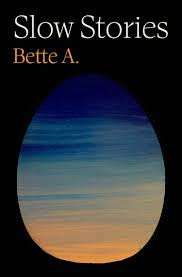
Listening to Bette A.’s voice and the soft ambience from Eno on the recording, I feel safe, in a cacoon. It is this primal feeling I get, of having a mother or an aunt or a sister read to me while in bed. It’s so primal. It’s so timeless, as we are taken into the world of story.
(As of now, there is only a vinyl version available of the recording. I got to listen to a promo as a music reviewer. It would be wonderful if they released an edition that made the recording affordable for everyday fans. That said, the entire art package does go to a charity, The Heroines! Movement, a global storytelling movement around women role models, co-founded by Bette A.)
The quality of Bette’s voice is such that it fills me with emotion. It is this feeling of being read to, slowly, softly. I realize I haven’t experienced this in so long, that I am overwhelmed with a grief I did not know I had, grief for something I did not know I was missing. I listen to audiobooks sometimes but those don’t really count. Podcasts can be even worse. Poetry readings are good, but there every poet wants to be heard. When was the last time someone told you a tale and you really slowed down enough to listen and take it, be absorbed into it, be absorbed by and saturated by the story?
The fact that they are slow makes them better. This isn’t an audiobook you are rushing to listen to because you need to fill up your information gathering quota. Information isn’t knowledge. These are stories and there is wisdom inside them. The information highway sped things up, this is an analog off ramp inviting us to slow down.
When they started to record the stories in this multimedia project, Brian’s only instruction to Bette was to read her tale “Slow, slower, even slower, yes, more slow.”
It seems to me that “Slow, slower, even slower, yes, more slow” should be a new Oblique Strategy.
Slow down, listen deep, and find the grains of wisdom spoken by the wise woman in your life.

.:. .:. .:.
The writings presented here will always be free and never paywalled, but there are a few ways you can support my work: pass on the essays on to others, share the links to other sites and telling your friends. You can take out a paid subscription to this subslack if you’d like to be a patron to the arts as represented here. I have also set up a Buy Me A Coffee page, which you can find here if you would like to put some money in my rainy day coffee jar. You can buy my book The Radio Phonics Laboratory: Telecommunications, Speech Synthesis, and the Birth of Electronic Music, or my poetry book Underground Rivers, if you want to show some support and keep my writing in circulation. Thank you to all my readers and supporters. Your generosity means the world and helps support my universalist bohemian art life! Thanks for keeping me caffeinated and wired.
☕️☕️☕️
A fantastic amalgam of eclectic references and insights as per usual Justin! Had the privilege of seeing Oliveros perform once -- arranged by her former lover and art collaborator Linda Montano -- and I love reading her writings and listening to her recordings. Donna Tartt video by Milhaus/Matt is excellent and kind of mesmerising. Reminds me a little of the use of Alan Watts' voice sampled in various electronic/house tracks, and she has a passing resemblance to the Audrey Horne character (actress Sherilyn Fenn) in Twin Peaks! Nice comment about communing with the aunties, a young artist friend of mine has called the octogenarian artists she's befriended or interviewed "war veterans" -- the avant-garde wars.
Well said, Justin, and cheers for the citation! I spent a LONG time listening to that interview, and then patching together tiny fragments of her speech.