A Note on Retromancy
Journey Inwards, Outside the Circles of the Time

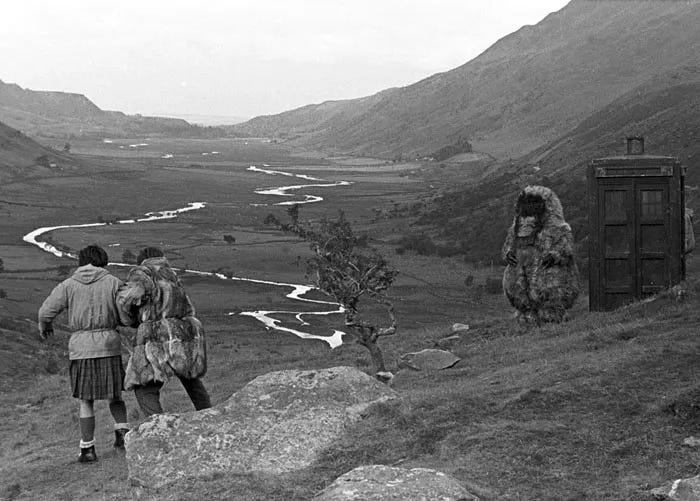
Is the past such a bad place to hang out, to gain inspiration from?
It worked for the Renaissance. When Marsilio Ficino translated the Corpus Hermeticum into Latin it kickstarted the esoteric revival in the West. His revival of Platonic philosophy and its subsequent effect on the Humanism and the way it percolated out into the arts where it then permeated European left us in an afterglow that can still be felt today. Great minds like Ficino’s believed that books like the Corpus Hermeticum contained timeless wisdom. Such knowledge, as opposed to just information, still had relevance for seekers in his own time. It is because he tapped into such timeless wisdom and bequeathed it to the future that today’s seekers can refresh their spirits by dipping once again into its mysteries. The wisdom of books like the Corpus Hermeticum still have wisdom for us today.
If some renaissance artists had to dig up sculptures from the Greek ruins of previous civilizations to find inspiration, so what! When they found that inspiration it set the standard for lifetimes of work, lifetimes of renewal.
Kim Cascone recently mentioned that 90s rave culture is now as far in the past as 60s hippie culture was to rave culture. Yet their inherent power remains. Part of why we may have no counterculture now, is because of the dead ends the arts have run into as they traverse the reality labyrinth. Further back than the ravers and the hippies were the counter-current weird ones now well over a century past, hanging out at Ascona in Switzerland, around Monte Verità in the late 1800s and early 1900s.
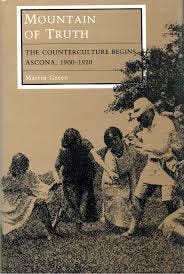
Some of the people who hung out at the Mountain of Truth were folks such as Hermann Hesse, Carl Jung, Hugo Ball, Theodor Reuss, Paul Klee, Otto Gross, Rudolph Steiner and many others. Naked hippies looking for natural cures before hippies went naked as they ate sprout sandwiches. Hesse’s novel Journey to the East seems to be very much inspired by his earlier time spent with these seekers, these members of what we might as well call The League.
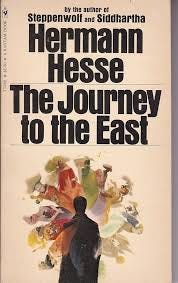
For those who yet to read it, the league is a timeless spiritual sect whose members include people from history such as Pythagoras, Plato, Mozart, Baudelaire and Paul Klee. The league also has members from the realm of the imaginal, including Don Quixote, Puss in Boots, Tristram Shandy, Goldmund (from Hesse’s Narcissus and Goldmund), and the artist Klingsor (from Hesse’s Klingsor’s Last Summer), and the ferryman Vasudeva (from Hesse’s Siddhartha).
These figures of the League are connected to one another even though they live in different time zones. Time zones with differences of centuries and millenia. Not to mention spatial differences of psychogeography.
I would count Doctor Who as another member of the League. As a time traveler he had recourse to go to all different points of space-time for his many missions. So too, we can use the power of time travel to go back into the past and search for the artifacts needed for the renewal of the future. The point of inspiration could be near or far in time.
We don’t go back in time to make stuff that is for yet another museum piece, no offense to the muses. We go back in time to find things to remix and recombine. Our art is the art of combinations. What did the hippies know that we might use, what about the punks, the ravers?
Hear the sound of the techno acid beats from the free festivals at Stonehenge resting on a web of neo-Transcendentalism. Let freedom ring in the free jazz notes trumpeted out from hidden pockets of improvisation. Our own voice joins with that of the past to braid a new thread, to remix and remake.
Synthesis now! is the motto of the interpolater who brings old inserts to bear on present problems.
You don’t need to have a TARDIS to become a time traveler. Even if you wish to make something living and breathing, you can still seek out the secret doorways in the library, open up old books and commune with the minds of the dead, a perfectly respectable kind of necromancy. Or visit the museum.
Another kind of internal time travel is possible for those who have trained their imaginations. It can be done without leaving your easy chair, though a hard chair is preferable. The voyage need not be for an extended period of time for the wrinkles to have ripples of large effect.
For those who don’t want to recombine, straight up reenactment of the past is another possibility worthy of pursuit. Become a surrealist, or a dandy flâneur. Live like people lived in the 19th century. You can do so without becoming a Victorian prude hell bent on colonizing the known world.
Art in turn can be like an ism. If an ism comes to us from the religions of Paganism, Hinduism, Judaism, Shintoism and the like, than it makes sense that the devotees of Dadaism, Surrealism Serialism and Minimalism adhere to the aesthetic philosophies with rigor. Genres of music become critical lifestyle choices, worldviews for listeners to inhabit. Our band could be your life, after all. Join a cult of music.
In the end, there is no substitute for Awen, a name for what people in the Druid tradition call inspiration. Divine revelation can come from dreams, it can come to us from our guardian spirits, the daemon or guardian angel, the higher self. It can come to us as a gift carried on the breeze, like a seed waiting to root itself and bring renewal to the land.
To find moments of inspiration, sometimes it is necessary to cut ourselves off from the chatter of input on the multiplexed media channels of the hyperreal, hyperpresent panopticon. Going into solitude for a time, as a hermit in the desert, as a hermit in some ancient woodland grove, as a hermit tucked away, hidden inside the honeycomb of urban sprawl. Here we can listen to the inner voices that would seek to find an expression in whatever medium, and find their way to those needful of their message, bringing small changes to the culture from the cracked places on the fringe.
.:. .:. .:.
The writings presented here will always be free, but you can support my work by passing the essays on to others, and sharing the links to other sites and telling your friends. I have also set up a Buy Me A Coffee page, which you can find here if you would like to put some money in my rainy day coffee jar. You could also buy my book The Radio Phonics Laboratory: Telecommunications, Speech Synthesis, and the Birth of Electronic Music, or my poetry book Underground Rivers, if you want to support me.
☕️☕️☕️
Thank you to everyone who reads this and helps support the universalist bohemian art life by keeping me caffeinated and wired.
I think meeting in the past, in person, is quite nice. This is basically what happens for most people at church every Sunday. They are meeting in the past, the present, and the future in one place.
I think I'm becoming more and more convinced though, that meeting online is a simulacra of irl. I think I'm less worried about kids meeting in the woods than perhaps in chat rooms in Roblox.
Yet again, we have accord. :)
I appreciate how you recently described time as a spiral. (I'm more of a "wheels within wheels" guy, but c'mon, I think that's just splitting hairs.) As such, the disruptive trailblazing touted by technocrats has always been a delusion. We can't outrun our past, nor is it healthy to try.
I've mentioned before, but we have a bad modern habit of judging older art as "good" only when it's "ahead of its time"—that is, what makes it good is that we can find elements within it that we recognize as progressive by modern standards. Seldom do we have the courage to call something "good" because it calls our progressive ideals into question or illustrates their limitations.
As for Awen, Cynddelw Brydydd Mawr called it "the breath of midnight prayers." I think that's a wonderful description, and I agree that there's no substitute for it. The Welsh believed that we made the most out of Awen by having a prepared imagination, and we got one of those by practice, study, and maintaining communication with the past, the land and our ancestry. Can't recommend that highly enough.